Linguistic Principles for
Foundation Models
Rephrase a problem, and a model's reasoning can collapse. What if language itself is the design axis we've been missing?
Rephrase a problem, and a model's reasoning can collapse. What if language itself is the design axis we've been missing?
We extend our submission deadline to 6 Sep 2026 AoE, submit your research right now!
📢 We are actively recruiting reviewers and sponsors — if you are interested, please reach out at yangzqccc@gmail.com.
The scaling paradigm is approaching its limits on reasoning-intensive tasks[1], and agentic and scientific applications increasingly push models into domains where free-form natural language is demonstrably inadequate[2]. This workshop treats the linguistic[3][4] and symbolic[5] medium through which foundation models perceive, reason, and act as a first-class design axis, on par with architecture and scale.
We invite high-quality submissions at the intersection of linguistic principles and foundation models. Accepted papers will be presented as posters, and selected submissions will be invited for contributed spotlight talks.
Submissions must be in English and use the NeurIPS 2026 workshop LaTeX template. Papers are submitted as a single PDF:
References and appendices do not count toward the page limit, but the main text must be self-contained.
Topics include, but are not limited to, the following.
Structured, symbolic, or formal representations — including typed slots, intermediate notations, and formal grammars — that shape model schemas and improve reasoning, planning, and tool use.
How foundation models compose meaning from parts and generalize to novel combinations, and how reference, presupposition, implicature, scope, modality, and discourse structure are handled.
Cross-linguistic variation, low-resource languages, language-universal versus language-specific representations, and how tokenization and morphological complexity shape capability, including principled alternatives to current schemes.
Foundation models as learners and cognitive models, with comparisons to human acquisition and processing. Bridging developmental psycholinguistics and machine learning.
Mechanistic analysis of how syntactic, semantic, and pragmatic structures are encoded in model internals: how linguistic structure emerges, is represented, and can be recovered from neural computations.
How paraphrases, formal rewrites, and intermediate languages (code, math, logic) reshape reasoning on the same task; structured languages for agent planning and tool use; and domain-specific notations such as Lean, PDDL, and LTL as media of model reasoning.
Benchmarks beyond surface accuracy, covering compositional generalization, paraphrase robustness, pragmatic inference, and cross-linguistic competence.
Extending linguistic principles to vision-language, speech, sign-language, and embodied foundation models; models that design their own symbolic media; and theoretical frameworks linking language structure, schema formation, and model capability.
Saturday, 12 December 2026 · International Convention Centre Sydney · MR C3.3.
All times are Sydney local time (AEDT, UTC+11). Oral presentations are 6 minutes each, including Q&A.
| Time | Speaker | Topic |
|---|---|---|
| 09:00–09:10 | Organizers | Opening Remarks |
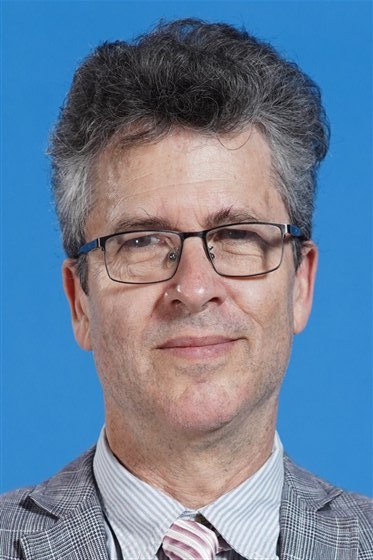
| 09:10–09:40 | Wray Buntine | Linguistic and Interpretative Capabilities of Foundation Models for Language |
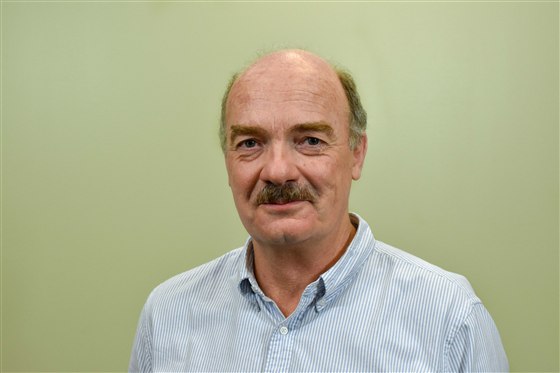
| 09:40–10:10 | Cécile Paris | Question Answering Fit for Purpose: A Perspective from Natural Language Processing and User Modeling |
| 10:10–10:40 | Eduard Hovy | The Structure of Semantic Representation in Embedding Space |
| Contributed Orals I · 6 minutes each, including Q&A | ||
| 10:40–10:46 | Emanuele Sansone | Can AI Understand the Language of Origami? |
| 10:46–10:52 | Nicholas Runcie | Talk Like a Molecular Graph: Chemical Representations for Large Language Models |
| 10:52–10:58 | Jindong Wang | Beyond Structural Unification: A Perspective and Roadmap on Unified Multimodal Models |
| 10:58–11:04 | Kaibang Zhang | Same Answer, Different Path: Measuring Prompt Sensitivity Beyond Task Outcomes in Small Language Models |
| 11:04–11:10 | Tim Tomov | What Is a Clarification? Estimating Model-Dependent Input Ambiguity |
| 11:10–11:16 | Han Zhang | Adaptive Content-Contrastive Decoding for Representation-Robust Tabular Reasoning |
| 11:16–11:36 | — | Coffee Break |
| Contributed Orals II · 6 minutes each, including Q&A | ||
| 11:36–11:42 | Yan Liu | Triplet-Aware Sparse Higher-Order Attention for Natural Language Understanding |
| 11:42–11:48 | Kai Han | Where Natural Language Ends in Agents: Executable Skill Composition with MetaSkill |
| 11:48–11:54 | Chaoyang Zhou | Intra-Trajectory Consistency for Reward Modeling |
| 11:54–12:00 | Daniel Yoo | The Assistant Persona Differs Across Languages in Activation Space |
| 12:00–12:06 | Benedict Tessler | Model Hypnosis: Strong control of AI via additive subliminal effects |
| 12:06–13:00 | — | Lunch Break |
| 13:00–13:40 | Roger Levy Online | Linguistic structure, probability, and language processing in humans and large language models |
| 13:40–14:10 | Jey Han Lau | How linguistic relationships shape representation |
| 14:10–14:40 | Tal Linzen | Less Superhuman Language Models |
| 14:40–15:10 | Usman Naseem | Mechanistic-Driven AI Safety and Alignment |
| 15:10–15:40 | Reza Haffari | What Should an Instruction Make Explicit? Language and Planning in Foundation Models |
| 15:40–16:00 | — | Break |
| 16:00–17:00 | — | Poster Session & Coffee Break |
| 17:00–17:10 | Organizers | Closing Remarks |
The programme is subject to change · a shareable version of this page lives at lp4fm.github.io/invitations
We are excited to welcome leading researchers from linguistics, cognitive science, natural language processing, and machine learning.



Questions or feedback? Feel free to reach out.
For questions about the workshop, submissions, or collaboration:
NeurIPS 2026 · International Convention Centre Sydney
Exact venue and time slot will be announced closer to the event.
The workshop is held in-person at NeurIPS 2026 in Sydney. Remote presentations are supported to accommodate last-minute schedule changes for invited speakers and authors.
No, the workshop proceedings are non-archival. Authors of accepted papers retain full copyright and are free to submit extended versions to future venues.
We plan to offer a small number of registration-fee waivers and, where possible, travel subsidies, with priority for student authors and participants from under-resourced institutions.
Yes. Previously published work is welcome for presentation but is not eligible for workshop awards.